
In the world of security analysis, Splunk and Microsoft Sentinel have recently established themselves as two of the most popular SIEM platforms among companies, and they are both powerful tools to manage and analyze logs. However, there are some fundamental differences between the two solutions. But which of the two is the best fit for your organization? In this article, we'll compare Splunk and Microsoft Sentinel based on a variety of factors, including scalability, cost efficiency, deployment methods, and more to find out which solution is right for your business.
.png)
Cybersecurity is becoming an increasingly important issue in the contemporary digital landscape, with companies and organizations around the world investing significant amounts of money to better protect their IT infrastructures.
In all this, Microsoft has not stood idly by and has spent the last few years working hard on cybersecurity solutions to provide to users of Azure, its cloud computing platform and the second most used in the world.
One of the results of this work on the security of Redmond's cloud infrastructure is Microsoft Sentinel (formerly known as Azure Sentinel), a cloud-based SIEM (Security Information and Event Management) solution, whose primary capability is to detect, collect information, investigate and respond to modern cyber threats.
But Microsoft's solution isn't the only SIEM offering on the market, and several other companies have set up their dedicated offerings. Among these, we have the Splunk enterprise security package, which acts as a direct competitor of Microsoft's “Sentinel”.
But what are the differences and, above all, which one can be considered the best for your business? Let's find out in the next sections, but first a little review.
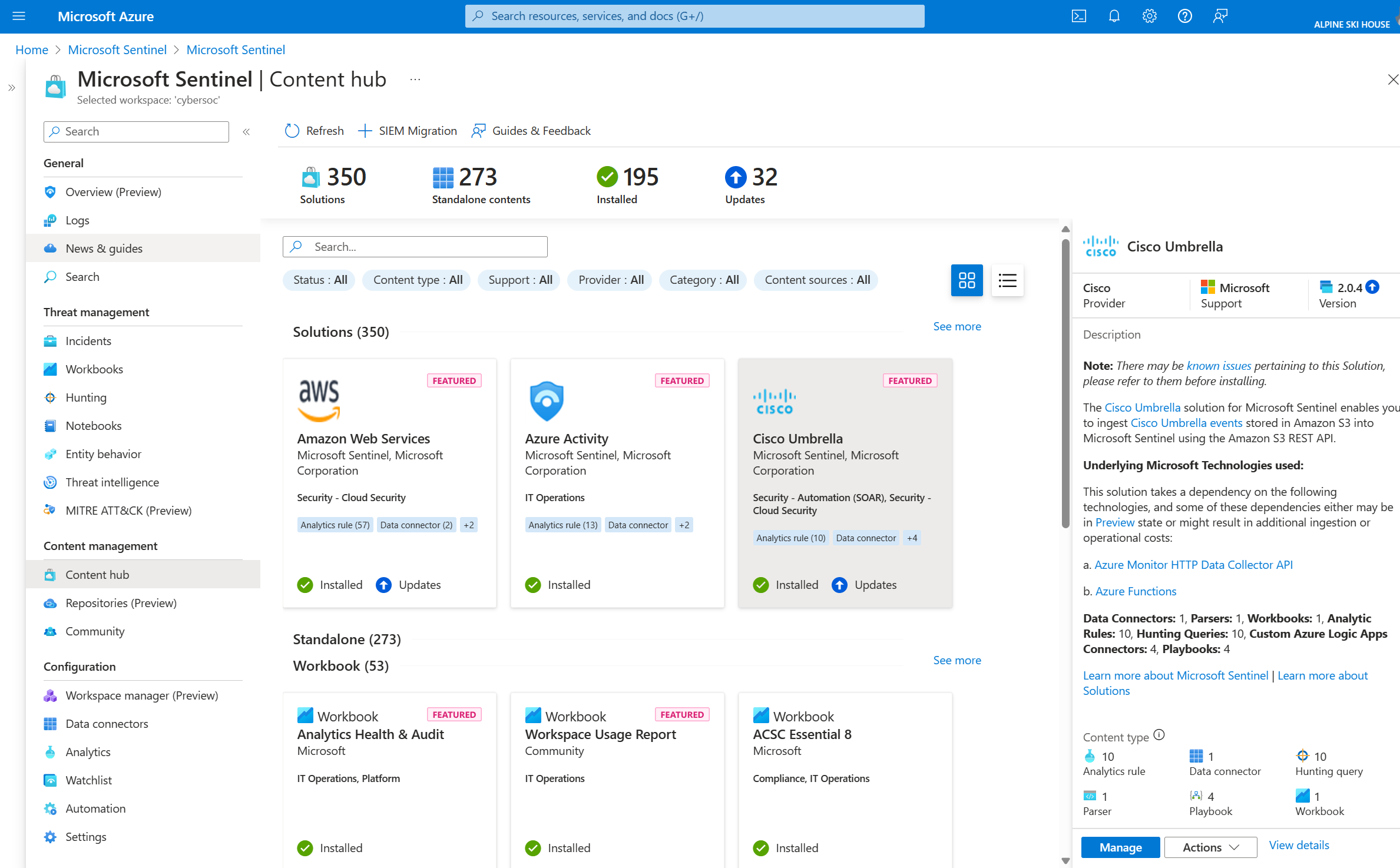
But what exactly does SIEM mean? AND SOAR? The first is nothing more than the acronym for Security Information and Event Management, a security solution that combines the functions of security information management (SIM) and security event management (SEM) in a single integrated system. The SIEM has the task of collecting, analyzing and correlating log data and security events from different sources within an IT infrastructure, in order to detect threats, anomalies and security breaches.
On the other hand, SOAR (Security Orchestration, Automation, and Response) defines a technological solution that integrates security orchestration, automation and incident response to improve the efficiency of security operations.
The benefits of SOAR include an improvement in speed and efficiency, as automation reduces response times and manual workload, accelerates the threat detection and mitigation process, and centralizes the management of security operations, offering a unified and complete view of the organization's security posture.
This approach allows organizations to manage an increasing number of security events without having to increase staff proportionately. Finally, the orchestration and automation capabilities allow for a proactive and preventive response, improving the organization's ability to deal with emerging threats.
Ok, after the review, it's time to take a closer look at our two contenders individually to learn to know them a little better and understand in a little more detail what they can offer to us.
Sentinel is Microsoft's Security Information and Event Management (SIEM) solution. Entirely cloud-based, Microsoft Sentinel represents a next-generation security solution, based on artificial intelligence and machine learning. With Sentinel, organizations can detect and mitigate threats faster.
The platform collects data from cloud environments, identifying potentially hidden threats and analyzing activities to detect any dangers that are not yet visible. Once threats have been identified, the AI-based solution analyzes and responds to them, with the possibility of “self-healing” the network. Incidents are handled more fully and promptly, thus reducing damage. Microsoft Sentinel includes built-in orchestration capabilities and the ability to automate numerous tasks.
Sentinel offers advanced analysis services, artificial intelligence and optimized and simplified data collection. Plus, it's a cost-effective solution, with predictable billing cycles.
Enterprise users appreciate Microsoft Sentinel's scalability, product design, stability, and ease of integration. They are particularly impressed by its metric collection, load balancing, and analysis solutions capabilities. Microsoft Sentinel is not a revolutionary technology, but it is a solid and reliable solution that offers support and automation for many traditional security and management processes.
Its modern approach to SIEM, based on Microsoft's extensive experience in cloud computing and data analysis, offers organizations numerous advantages:
Splunk was founded in 2003 and since then it has developed a wide range of cloud-based solutions designed to reduce administrative burden and improve security. Splunk's IT infrastructure also includes solutions DevOps and IT that can be integrated into the Splunk Security Cloud, offering organizations everything they need to protect and maintain their network.
Splunk is a “data-to-everything” security platform designed for security, IT, and DevOps. The Splunk Security Cloud includes features such as security analysis and SIEM, automation and orchestration, investigative and forensic analysis, security incident response, and unified security operations. Splunk is a comprehensive security solution that also uses big data and artificial intelligence to detect and mitigate threats.

Splunk is a relatively small company compared to Microsoft Sentinel, which leads some customers to perceive a more direct and personalized approach to their relationship with the company. Even if the technology is not as solid or well integrated as that of Microsoft Sentinel, it is still a reliable platform, constantly improving and developing. Pricing information varies for both Splunk and Microsoft Sentinel, making it difficult to directly compare costs between the two systems.
Splunk Enterprise Security aims to offer companies a unified platform for monitoring, detecting and responding to cyber threats. Let's see some of the main features:
We have created the Infrastructure & Security team, focused on the Azure cloud, to better respond to the needs of our customers who involve us in technical and strategic decisions. In addition to configuring and managing the tenant, we also take care of:
With Dev4Side, you have a reliable partner that supports you across the entire Microsoft application ecosystem.
Introduced The two contenders, the time has come to put them in a head-to-head comparison to better understand what are the main differences between the two. To do this, we will focus on the key characteristics that are considered to be among the most important when choosing a SIEM solution for your company.
Both Microsoft Sentinel and Splunk Enterprise Security offer capabilities for real-time monitoring, sending alerts, and threat detection. Sentinel's near real-time monitoring (NRT) rules, which run once a minute capturing the events ingested in the previous minute, provide analysts with detailed information. Splunk also offers real-time monitoring, but it generally doesn't reach the same data refresh rate as Sentinel.
When it comes to monitoring user activity, Sentinel can have an advantage thanks to the analysis of user and entity behavior (UEBA). Sentinel's UEBA goes beyond the traditional UBA (User Behavior Analytics), since it monitors behaviors and anomalies even of entities such as servers and network devices, and not only of individual users.
In terms of investigating use cases, both platforms offer similar functionality, such as detecting malware, monitoring privileged users, and identifying zero-day attacks. However, Sentinel's security orchestration, automation, and response (SOAR) functionality could make it a better solution for automated threat detection and response. Sentinel also uses cloud-based artificial intelligence to enhance its threat detection capabilities.
Microsoft Sentinel is known for being easier to implement, especially for organizations that are already using Azure or other Microsoft services. Integration with Microsoft services, such as Microsoft 365 and Microsoft Entra ID, is simple and requires minimal configuration. The platform's predefined data connectors simplify the onboarding process, and continuous updates ensure regular support for new data sources.
Deploying Splunk can be more challenging. Although some users report that the configuration is relatively simple, many find it complex, especially because of the Splunk system programming language (SPL), which requires time and training to master.
Additionally, migrating from another SIEM to Splunk can be difficult, as the platform's multilevel architecture adds complexity to the integration. SOC analysts often need extensive documentation and training to use Splunk effectively, especially in large scale implementations.

Microsoft Sentinel integrates with Microsoft services, making data collection easier for organizations that already use the Microsoft ecosystem. In addition, Sentinel supports a wide range of third-party applications, software, and network devices, which can make it suitable even for non-Microsoft environments.
Splunk's architecture is more complex, with a multilevel configuration that complicates integration. Its implementation and management require a higher level of technical expertise, especially for organizations that are transitioning from another SIEM platform. Managing and integrating Splunk with an organization's infrastructure often requires extensive customization.
Sentinel can simplify administration and report creation thanks to Microsoft Sentinel's Azure Monitor Workbooks and Workbooks, which allow users to generate customizable reports. The platform offers predefined templates for visualizing data, which are easily modified to meet specific needs. Workbooks allow you to generate reports fairly quickly, useful for presenting data to stakeholders.
Splunk offers similar reporting functionality, but with a more complex configuration. Although users have more options for how to present data—such as embedding reports on external sites or adding them to dashboards—the process is less intuitive. Splunk requires a deeper understanding of its system to effectively manage administration and reporting. Although detailed documentation is available, it adds an additional level of complexity compared to the more user-friendly reporting tools offered by Sentinel.
When it comes to costs, Microsoft Sentinel offers a more flexible consumption-based model, compared to Splunk. Sentinel charges based on the amount of data acquired and stored, allowing organizations to scale costs based on actual usage. In addition, Microsoft allows free data ingestion for certain services, such as Microsoft 365 audit logs.
Splunk Enterprise Security mainly adopts two licensing models: Ingest Pricing (based on the volume of data indexed per day in GB/day) and Workload Pricing (based on computing capacity). Entity Pricing is specific to Splunk Observability Cloud. While this may be predictable for organizations with stable data acquisition rates, it can become costly for companies that process large amounts of data. In addition, Splunk's licensing model requires careful planning to avoid exceeding data limits, which could result in unexpected costs.
The deep integration of Microsoft Sentinel with Azure and other Microsoft services can make it easier to configure them for companies that are strongly oriented to the Microsoft ecosystem. However, this can also result in a feeling of constraint to the Azure environment for organizations that use non-Microsoft tools, thus limiting a 'best-in-class' approach.
Splunk is more vendor-independent. It supports a wide range of third-party data sources, which can make it more attractive for organizations that rely on a diverse set of tools and platforms.
Although it offers greater flexibility, Splunk's proprietary SPL language and its complex architecture can still generate a form of lock-in, as migrating to another SIEM may require significant retraining and restructuring of security workflows.

And so we come to the final verdict: which of the two is better? The answer may always seem trivial but it's the usual one: 'it depends'.
The choice between Splunk Enterprise Security and Microsoft Sentinel depends on your organization's specific needs, budget, and existing infrastructure. Both platforms offer advanced functionality, but they have significant differences that may influence the decision.
Microsoft Sentinel is often preferred for its integration with other Microsoft services, such as Azure and Office 365. It is a cloud-native SIEM solution, which guarantees immediate scalability and threat detection based on artificial intelligence. Sentinel's pricing model, based on pay-as-you-go (actual data consumption) or commitment tier (daily commitment), may be more predictable and economically advantageous for companies strongly oriented to cloud services, especially considering the integration with Microsoft Entra ID.
On the other hand, Splunk Enterprise Security is known for its versatility and advanced data analysis capabilities. It is a tool capable of acquiring and analyzing data from a wide variety of sources, which makes it highly customizable for different environments.
However, this flexibility comes at a price: the complexity of the platform can be a disadvantage. The use of the proprietary query language (SPL) and a multilevel architecture require additional training and technical resources, especially during the initial configuration and deployment phases.
Ultimately, if ease of use, cloud-native integration, and affordability are a priority for your business, Microsoft Sentinel is probably the right choice. If, on the other hand, our organization needs high customization, manages complex data sources and can face a steeper learning curve, Splunk Enterprise Security may be the most suitable option.
Having valid, convenient and easily implementable security solutions has become in recent years much more than a simple structural element to take into account, but a real need that cannot be ignored. Especially considering how extremely dangerous the digital landscape has become with the advent of increasingly sophisticated cyber threats.
In conclusion, Splunk and Microsoft Sentinel are both powerful security solutions that can help organizations protect their data. Splunk is better suited to large companies that have already invested in Splunk Core, offering a wide range of functionality needed to monitor events in real time.
Microsoft Sentinel, on the other hand, is more suitable for companies integrated into the Microsoft ecosystem and that are looking for a true Extended Detection & Response (XDR) solution, with a strong focus on threat detection through analysis based on artificial intelligence.
1. What is the main difference between Microsoft Sentinel and Splunk?
Microsoft Sentinel is a cloud-native SIEM integrated into the Microsoft ecosystem (Azure, Microsoft 365, Entra ID) with strong use of AI and automation. Splunk Enterprise Security is a very flexible and data-centric platform designed to collect and analyze data from a wide range of sources, but it is often more complex to configure and manage.
2. Are Microsoft Sentinel and Splunk SIEM solutions, or do they also include SOAR capabilities?
Both provide SIEM capabilities. Microsoft Sentinel includes built-in orchestration and automation features (SOAR) and may be better suited for automated response. Splunk offers automation and orchestration within its Security Cloud offering, but implementation may require more configuration and expertise.
3. Which platform is faster for near real-time monitoring?
According to the text, Microsoft Sentinel uses near real-time (NRT) rules that run once per minute, providing very fast updates on ingested events. Splunk supports real-time monitoring, but generally does not reach the same update speed described for Sentinel.
4. Which solution is easier to implement?
Microsoft Sentinel is generally easier to implement, especially if the organization already uses Azure or other Microsoft services. Splunk may require more effort, particularly due to the learning curve of the SPL language and the architectural complexity of large implementations or migrations from other SIEM platforms.
5. Which solution integrates better with Microsoft 365 and Entra ID?
Microsoft Sentinel is recommended when working with Microsoft 365 and Microsoft Entra ID, as the integration is described as more immediate and native, with built-in connectors and simplified onboarding.
The Infra & Security team focuses on the management and evolution of our customers' Microsoft Azure tenants. Besides configuring and managing these tenants, the team is responsible for creating application deployments through DevOps pipelines. It also monitors and manages all security aspects of the tenants and supports Security Operations Centers (SOC).


