
Azure Static Web App for a GDPR-Compliant Public Form
How we collected applications and attachments from anonymous users for a non-profit foundation's public call with an Azure Static Web App, OTP and Azure Information Protection.
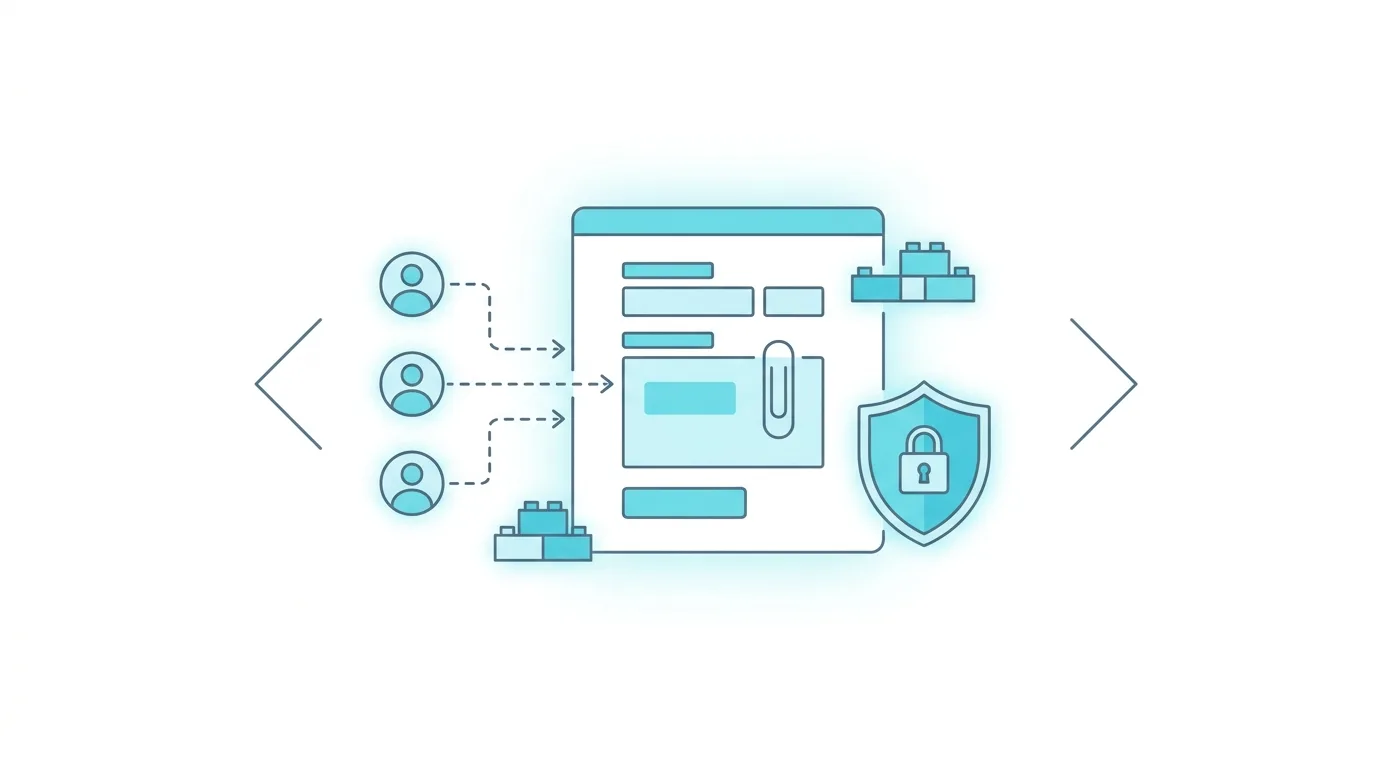
Collecting applications with attachments from anonymous users — without being able to require Microsoft authentication — while staying GDPR-compliant is a problem no off-the-shelf tool solves on its own. For a non-profit foundation’s public call aimed at citizens across roughly 100 municipalities in northern Italy, we solved it with an Azure Static Web App, OTP verification and Azure Information Protection: the collection closed on time.
Applicants had to submit their application, enter personal data and attach documentation on their household’s economic situation. The data had to flow into SharePoint for the evaluation committee, with confidentiality guarantees and GDPR compliance, by a fixed deadline. The requirement looked simple — a public form with attachments — but the complexity emerged in the details, as often happens when digitising forms and attachments aimed at external users.
The problem: collecting attachments from anonymous users without friction
The call was open to the general public: people outside the foundation’s tenant, with no Microsoft account. The experience had to be accessible and unfragmented, because the audience included people in economic hardship. And the DPO had precise requirements: Information Protection on the documents, a 12-month retention policy, access limited to the committee. No off-the-shelf tool met the whole set of requirements. Finding the right solution meant evaluating and discarding two alternatives.
The solution: three hypotheses, one choice
Hypothesis 1 — Microsoft Forms. It integrates natively with SharePoint and needs no development. But in unauthenticated mode Forms cannot collect attachments: files can only be uploaded with a Microsoft account. For a call aimed at citizens, a blocking limitation. Discarded.
Hypothesis 2 — Forms for data + a tenant invite for attachments. Collect the data with public Forms, then invite the user as a guest in the tenant to upload attachments in a second phase. Technically it worked, but it produced a fragmented experience: fill in a form, wait for an email, accept the invite, log into a second environment. For a foundation addressing people already in difficulty, unacceptable. Discarded.
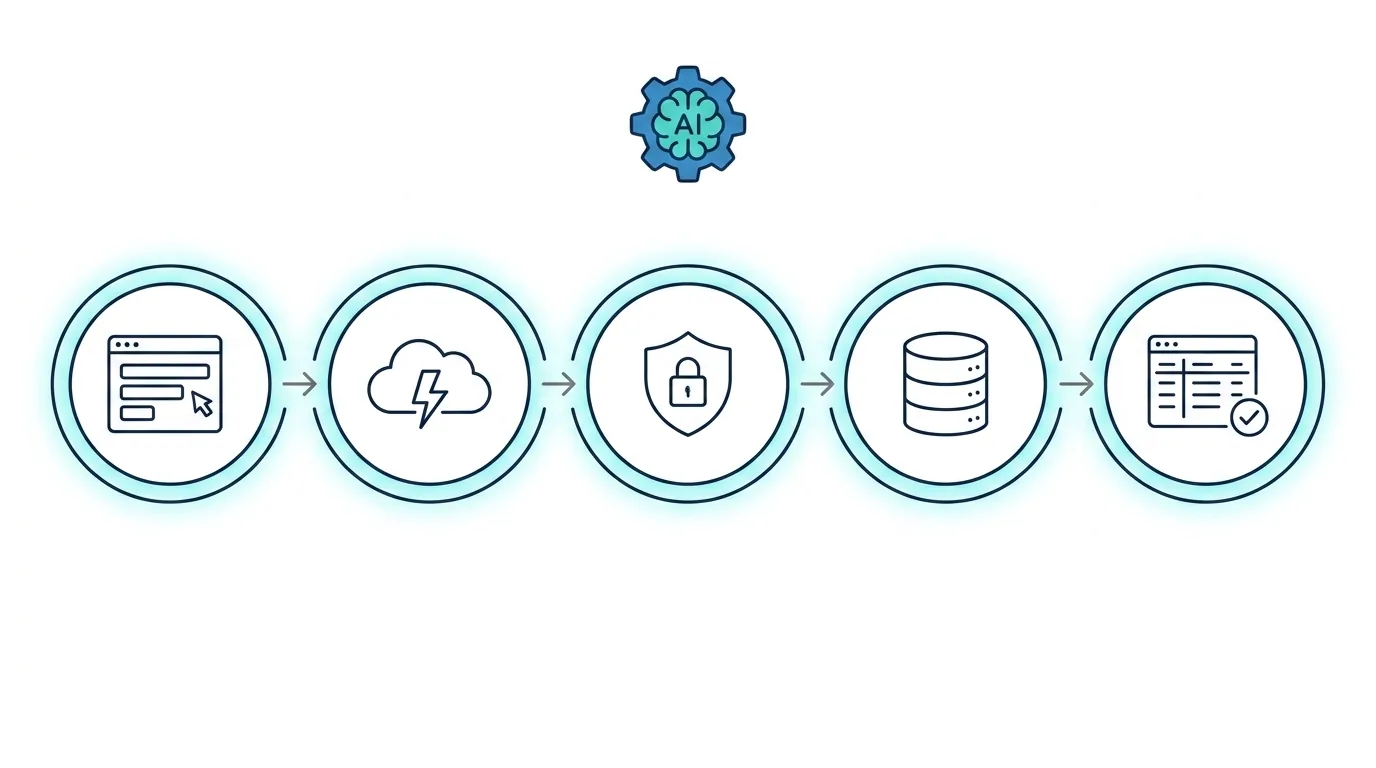
Hypothesis 3 (adopted) — Azure Static Web App with a custom form. The final solution meant leaving the off-the-shelf tools and building something tailored. We developed an Azure Static Web App with a custom form that handles the whole experience in a single session:
- Email verification via OTP. Before filling in the form, the applicant enters their email and receives a one-time code. Each application is tied to a verified address, with no account creation and no Microsoft credentials. The access barrier stays low; data validity stays high — an external-identity principle close to that of an Azure B2C/B2B architecture.
- Data and attachments in a single session. The form collects the personal data and allows the upload of attachments — income documents, economic certifications — with no interruptions and no redirects.
- Saving to SharePoint with Azure Information Protection. Data and files are saved to SharePoint Online in the foundation’s tenant. Documents are labelled with a confidentiality tag: access is limited to the committee, and the label follows the document even outside SharePoint.
- 12-month retention policy. At the DPO’s request, data is kept and then automatically deleted in line with personal-data-protection regulations.
The results
The call was published across roughly 100 municipalities in northern Italy and the collection closed on time. Applicants submitted their applications with a smooth experience, in a single session, with no technical friction. The committee found data and attachments organised and accessible on SharePoint. The DPO obtained the required compliance guarantees: Information Protection on the documents, GDPR-compliant retention, access limited to authorised staff only. The foundation could focus on selecting beneficiaries, not on managing the collection.
Who this approach is for
The model suits foundations, public bodies, associations and non-profits that must collect applications with attachments from anonymous users, without being able to impose Microsoft authentication. It is especially relevant when the DPO’s requirements are strict — document confidentiality, automatic retention, limited access — and when simplicity of the user experience is a functional requirement, not an option. The same logic as a custom web application tailored to the client, applied to the public collection of sensitive data.
If you run a public call or collection with confidentiality and GDPR requirements, we can help you build the right system. Contact us for an assessment →

Written by
Mattia Musazzi
Modern Work · Dev4Side