
An AI Agent for Social Media Guidelines, Inside Teams
How we made the social communication guidelines of an international pharmaceutical group easy to consult with an AI agent built on Copilot Studio, SharePoint and Microsoft Teams.
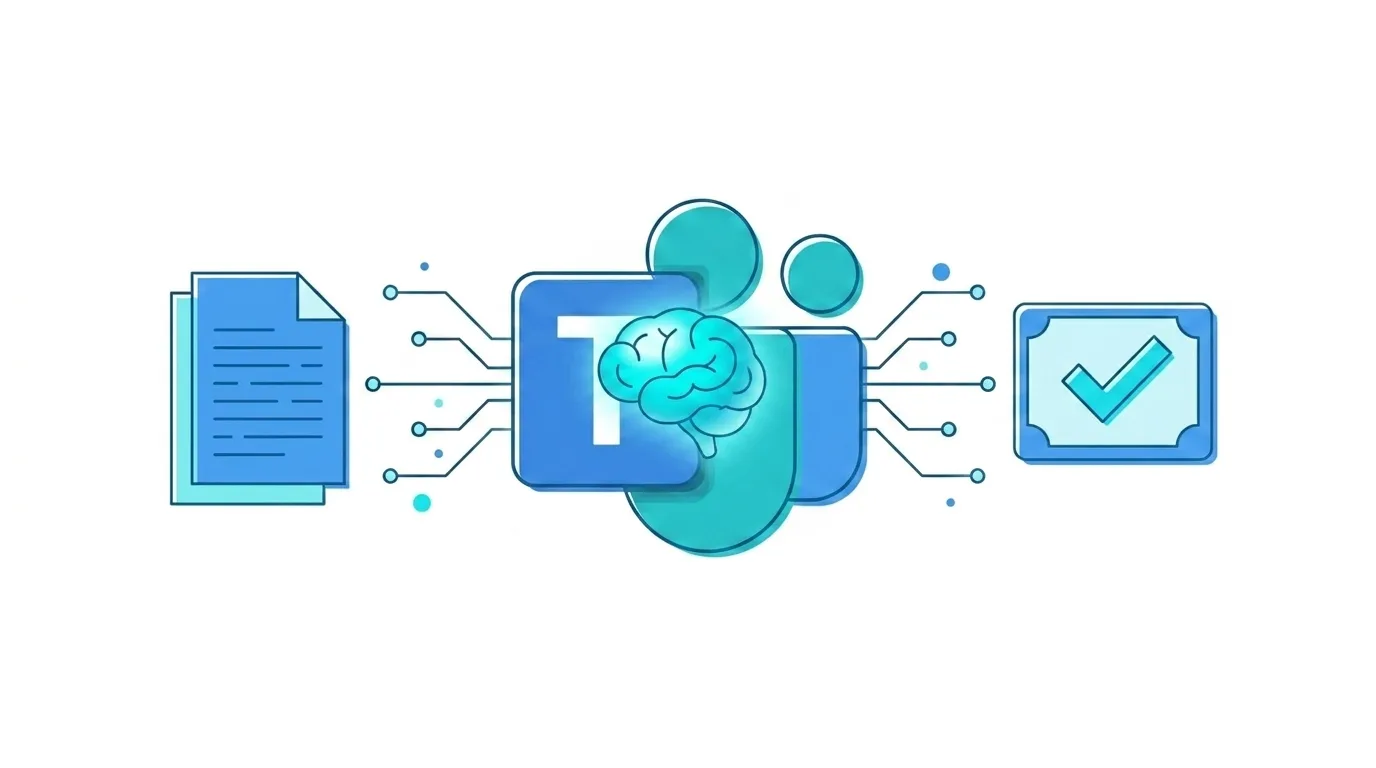
An AI agent for social media guidelines is a conversational assistant that answers employees’ questions about communication policy inside Microsoft Teams — citing the exact source instead of leaving them to search through a long document. For an international pharmaceutical group we built it with Copilot Studio and SharePoint Online, extending the same approach as an AI-agent project already under way in HR.
The social communication guidelines already existed, documented and complete. The problem was not the knowledge: it was the accessibility. Nobody consulted them at the moment they actually mattered — a moment before hitting “Publish”. We tackled the topic with the same method as the HR AI agent on Copilot Studio, bringing the policy into people’s workflow.
The problem: written policies nobody consults at the right time
In a pharmaceutical group, communication is regulated ground: EMA and FDA rules, EFPIA codes, internal policies on medical claims. What can be said, where, how to name a product in a post, how to reply to a comment flagging an adverse event: these are decisions with concrete implications.
The answers to these questions existed, but they lived inside a long, articulated document that was hard to consult in the instant the question came up. So the questions kept arriving, recurring, at the Marketing and Communication team: “can I share this press release on my LinkedIn?”, “how do I name this product in a post?”, “can I reply to a comment about an adverse effect?”. Every question was an interruption; every answer, a manual search through the policy. The knowledge was there, but not in the right place at the right time.
The solution: an AI agent on Copilot Studio, inside Teams
The group had already launched an AI-agent project in HR. We extended the same approach — and the same architecture — to the social guidelines, developing on Copilot Studio and SharePoint Online. Starting from an already validated architecture accelerated development: patterns, governance and indexing logic had already been defined.
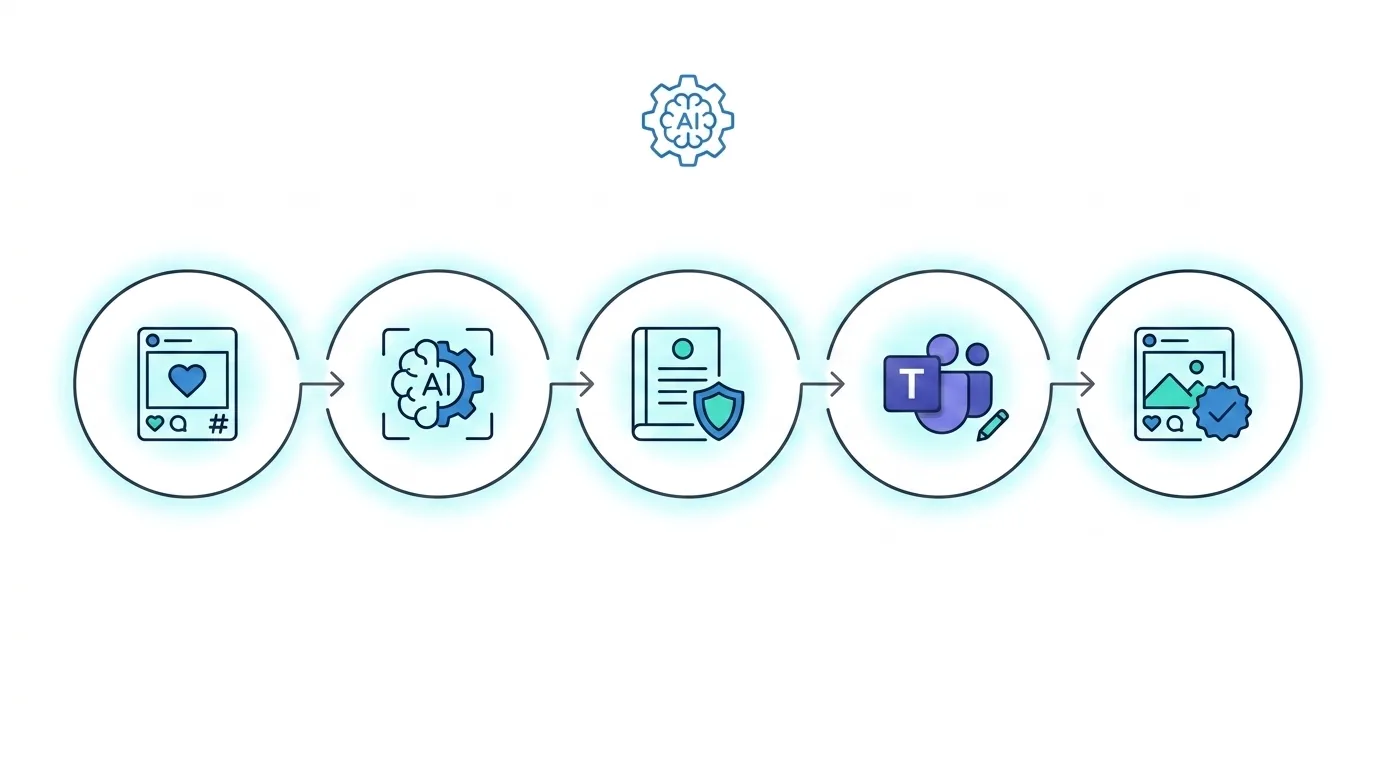
The agent lives inside Microsoft Teams, the environment people already use every day. The employee writes the question in natural language; the agent searches the policy documents uploaded and indexed on SharePoint, builds a contextual answer and cites the exact source — so whoever reads it knows where the answer comes from and can dig deeper.
A non-negotiable point in the pharmaceutical sector: the data stays inside the organisation’s Microsoft boundary. No information is sent to consumer AI services; the conversation, the documents and the permissions follow the policies already in place on the tenant.
From reactive to preventive compliance
The deeper value of the project is not technological. Regulations vary by channel, audience and country: knowing in advance what is allowed, before publishing, changes the nature of the control. The agent works like a guardrail: the person checks before hitting “Publish”, not after something is already online. It shifts from reactive compliance — you fix things when a problem surfaces — to preventive compliance, where verification is part of the everyday act of publishing.
The results
The value of the project is not the technology itself, but the accessibility of knowledge. The policies already existed; the project made them consultable at the right time and in the right place — inside Teams, at the moment of the question.
The Teams integration meant no change of habits for people: not a new tool to learn, but an answer inside an already familiar environment. That translates into real adoption. The Communication team gets fewer interruptions for recurring questions, and people get reliable answers, anchored to the official policy rather than an approximate memory.
Who this approach is for
The approach is relevant for organisations in regulated sectors — pharmaceutical, financial, legal, healthcare — that have substantial, complete policy documentation but consult it too little at the moment it would matter. It is particularly useful for companies with teams operating across multiple markets, where the rules change by country and the memory of individual people is not enough to cover every variant.
If in your organisation the knowledge exists but nobody consults it at the right time, the problem is often not writing new rules: it is making them accessible inside the workflow. Contact us for an assessment →

Written by
Mattia Musazzi
Modern Work · Dev4Side